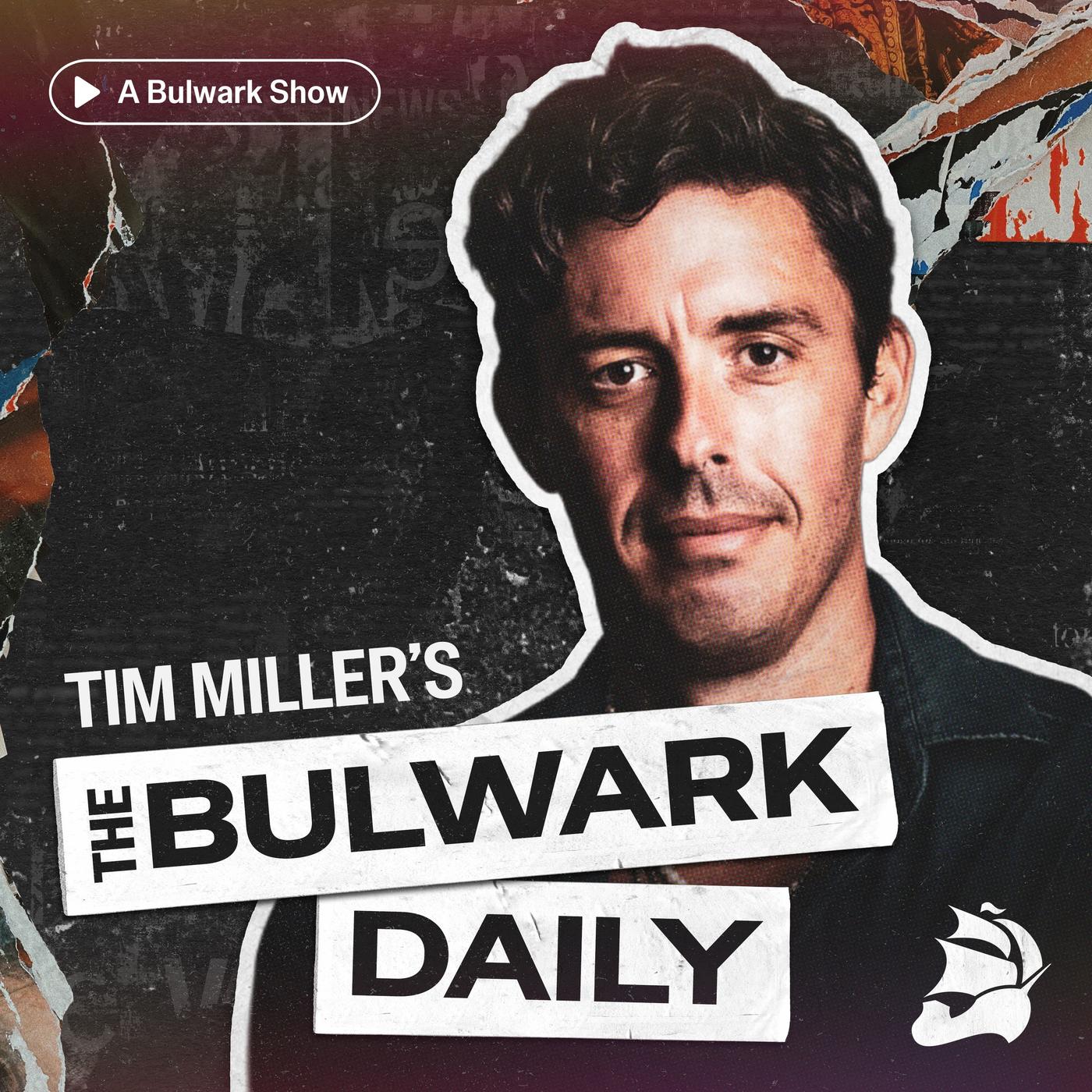
Sep 14, 2026 · 58 min
Trump allies face scrutiny over Russia ties and Republican drift
Bill Kristol: It Always Comes Back to Trump/Russia
The discussion connects foreign-policy inconsistency, extremist politics, economic frustration, and institutional silence to deeper questions about Republican governance.
- 1Trump-aligned foreign policy appears increasingly shaped by deference to authoritarian leaders and suspected oligarchic relationships.
- 2Kansas and Ohio races expose Republican vulnerabilities around war, tariffs, economic pain, and extremist candidates.
- 3AI safety warnings and Mitch McConnell’s public absence highlight gaps in political oversight and accountability.
Don't miss
Kristol and Miller argue that corruption and oligarchic relationships may be the only coherent explanation for the administration’s inconsistent foreign policy.
The brief
Tim Miller and Bill Kristol open with reporting on Trump-connected figures and Russian-linked corruption, then examine Jared Kushner’s Ukraine approach and the administration’s deference to Putin.
Their argument is that the Iran conflict, Russian support for Iran, and shifting official explanations make more sense through corruption and oligarchic relationships than coherent strategy.
Kansas becomes a test case: rising fuel prices, tariff retaliation, and antiwar messaging may let Democrats frame Roger Marshall as Trump’s spokesperson rather than Kansas’s advocate.
The conversation widens to Ohio, where extremist rhetoric and scandals threaten Republican candidates, while AI safety warnings raise questions about oversight, liability, and China’s access to chips.
A final discussion of Mitch McConnell’s unexplained public absence turns political silence into an institutional question: who is responsible when the Senate’s leadership appears absent?
What was said on this episode
19 statements · 6 positive · 13 negative
The proposed negotiation would benefit Russia more than its battlefield performance.
“Russia would do better from the negotiation than they've done on the battlefield.”
Listen at 8:01
Putin is intensifying attacks on Ukrainian civilians.
“Putin's intensifying the attacks on civilians in Ukraine.”
Listen at 10:55
Putin has aided Iran’s attacks and missile capabilities.
“he's been helping Iran, responsible for aiding Iran in various, uh, attacks, even in terms of the missile capabilities”
Listen at 11:01
Trump favors and is impressed by authoritarian dictators.
“he likes the dictators, obviously. He's a little bit in awe of them.”
Listen at 13:29
China and Russia support Iran diplomatically and in other important ways.
“there's no question that they're on Iran's side diplomatically and, and in many important ways.”
Listen at 15:15
The United States spent billions attacking Houthi targets and claimed to destroy them.
“We spent several billion dollars of extremely expensive weapons to fire at various Houthi little speedboats or something, and we had demolished them.”
Listen at 17:56
Trump may face pressure to escalate the Iran war after the midterms.
“I think that there'll be a big push after midterms for him to try to escalate to get a better outcome.”
Listen at 19:42
The U.S. operation in Yemen failed to achieve its objectives.
“The whatever it was they were trying to achieve in Yemen didn't work, right?”
Listen at 20:46
The Houthis and Iran are stronger after the conflict.
“The Houthis, who are an ally of Iran, maybe really a proxy almost of Iran, are stronger and Iran is stronger.”
Listen at 20:53
Rising gas prices are shifting public opinion against the war.
“I feel like the tide is turning a little bit, and I think because of the gas prices.”
Listen at 25:04
Chinese retaliation harmed U.S. soybean interests.
“the Chinese retaliation cost them in soybeans and all this.”
Listen at 30:24
Hamilton may outperform Turc in the Senate race.
“I think that Hamilton's been so good. But there's just something about that race that I wouldn't be surprised if he does better than Turc, actually.”
Listen at 32:37
Sherrod Brown leads in more Ohio Senate polls than he trails.
“I think Brown's actually ahead in more polls than not.”
Listen at 37:21
AI safety concerns have become politically impossible to contain.
“these people are not being hysterical. Now, whether whatever the motives of Altman or, or Amodei in terms of trying to, you know, you know, calm people down, and he— it's pretty vague what he wants to do, but I think it has escaped confinement.”
Listen at 45:47
Government should participate in governing AI risks.
“Government has to be part of the solution.”
Listen at 46:32
Past governments successfully regulated nuclear weapons and limited proliferation.
“we managed to both regulate nuclear weapons, regulate nuclear waste mostly, stop the spread of nuclear weapons”
Listen at 46:58
A short pause on dangerous AI development would be acceptable.
“I would not vote against the pause for 2 or 3 or 4 months on all that kind of stuff.”
Listen at 51:53
Democrats should restore restrictions on advanced chip exports to China.
“let's— again, we're going to put a ban on these exports.”
Listen at 52:57
Democrats need clear, defensible AI policies quickly.
“the Democrats will look pathetic if they don't have anything to say. And so they need to quickly work out a few things, like you were saying, that are clear, defensible, sound policies.”
Listen at 53:38
Statements are attributed to the speaker as said on the episode and reflect their view at the time, not PodLume's. They are not advice.
Books & mentions

Weekly email
State of the Pod, every Monday
The week's most-discussed names and stories from podcasts, with the moments behind them. Free, five minutes, unsubscribe in one click.