Nov 2, 2026 · 10 min
Virtual reality turns movement into a learning advantage
Could virtual reality speed up learning?
The episode connects embodied training, memory-forming neurons, and overlooked black-hole systems to questions about how humans learn and measure the cosmos.
- 1Physical gestures helped participants learn complex visual categories four to six times faster than button-based controls.
- 2Individual amygdala neurons predicted which images epilepsy patients would later remember, extending the region’s role beyond fear.
- 3Low-energy X-ray sources may expose black-hole activity and help astronomers measure the universe’s expansion.
Don't miss
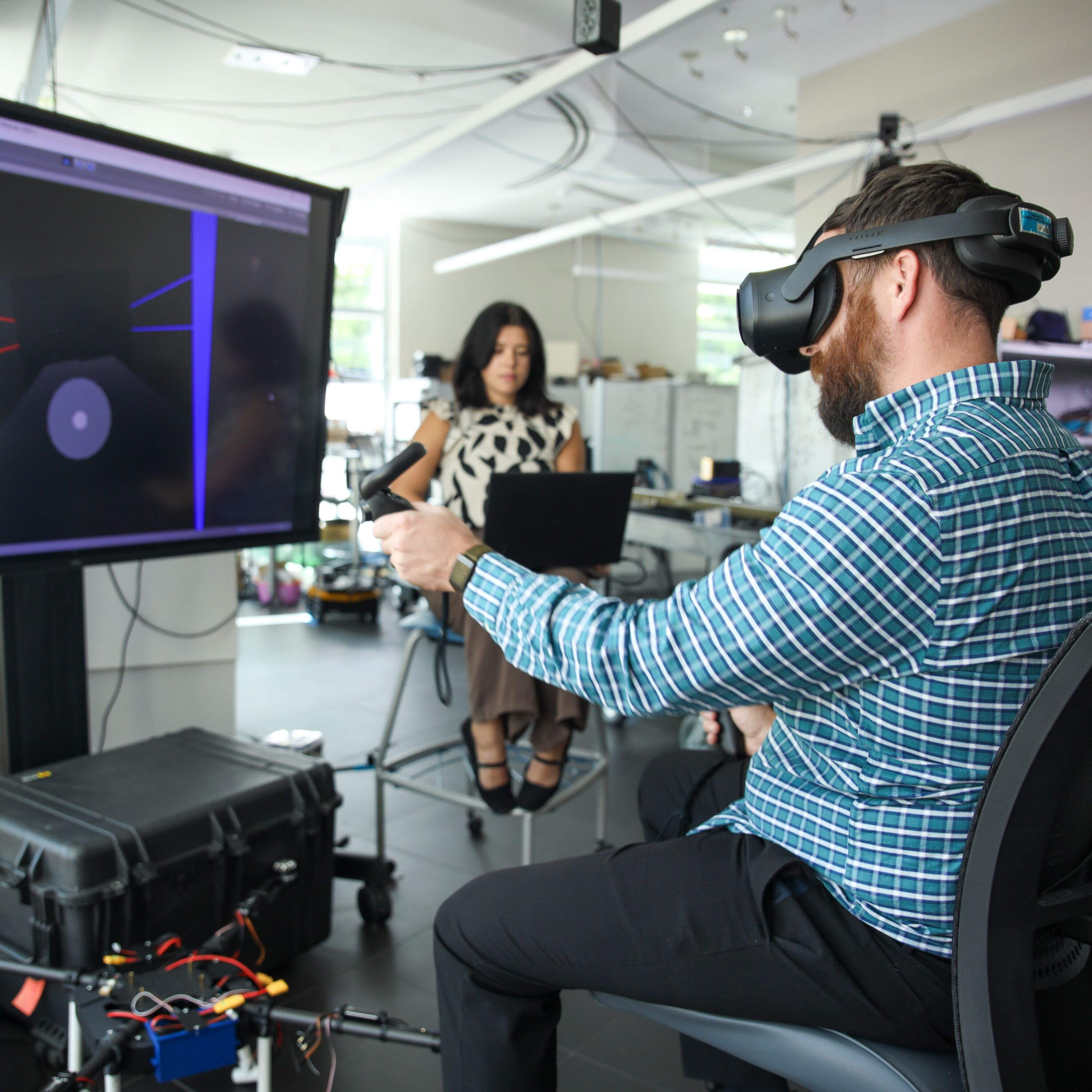
Participants using punches or virtual lightsabers learned striped-object categories four to six times faster than those using buttons.
The brief
Short Wave opens with a science roundup spanning learning, memory, and cosmic mysteries, hosted by Emily Kwong and Regina Barber.
A virtual-reality study found that participants who punched or swung lightsabers learned to categorize striped objects four to six times faster than people using buttons.
The result suggests physical movement could improve training for complex categories, turning virtual reality from a display technology into an active learning environment.
Researchers observing individual amygdala neurons in epilepsy patients found that stronger activity predicted which images participants would later remember.
NASA’s Chandra telescope revealed 84 overlooked low-energy X-ray sources, potentially showing black holes feeding on stars or creating zombie disks that could aid cosmic measurements.
Weekly email
State of the Pod, every Monday
The week's most-discussed names and stories from podcasts, with the moments behind them. Free, five minutes, unsubscribe in one click.