Nov 10, 2026 · 23 min
Autonomous labs turn scientific discovery into a feedback loop
Autonomous Labs
The episode examines whether machines can accelerate materials and manufacturing research without sacrificing safety, human judgment, or accountability.
- 1Autonomous labs combine robotics, automated experiments, and active learning to choose what scientists should test next.
- 2Livermore links supercomputing, advanced manufacturing, lasers, and simulation to shorten development cycles for national-security applications.
- 3Machine autonomy can expand scientific capacity, but layered safeguards and human validation remain essential when software controls physical systems.
Don't miss
The clearest demonstration comes from MatGym’s repeated cycle of fabricating, testing, and selecting new designs, showing autonomy as an active experimental loop.
The brief
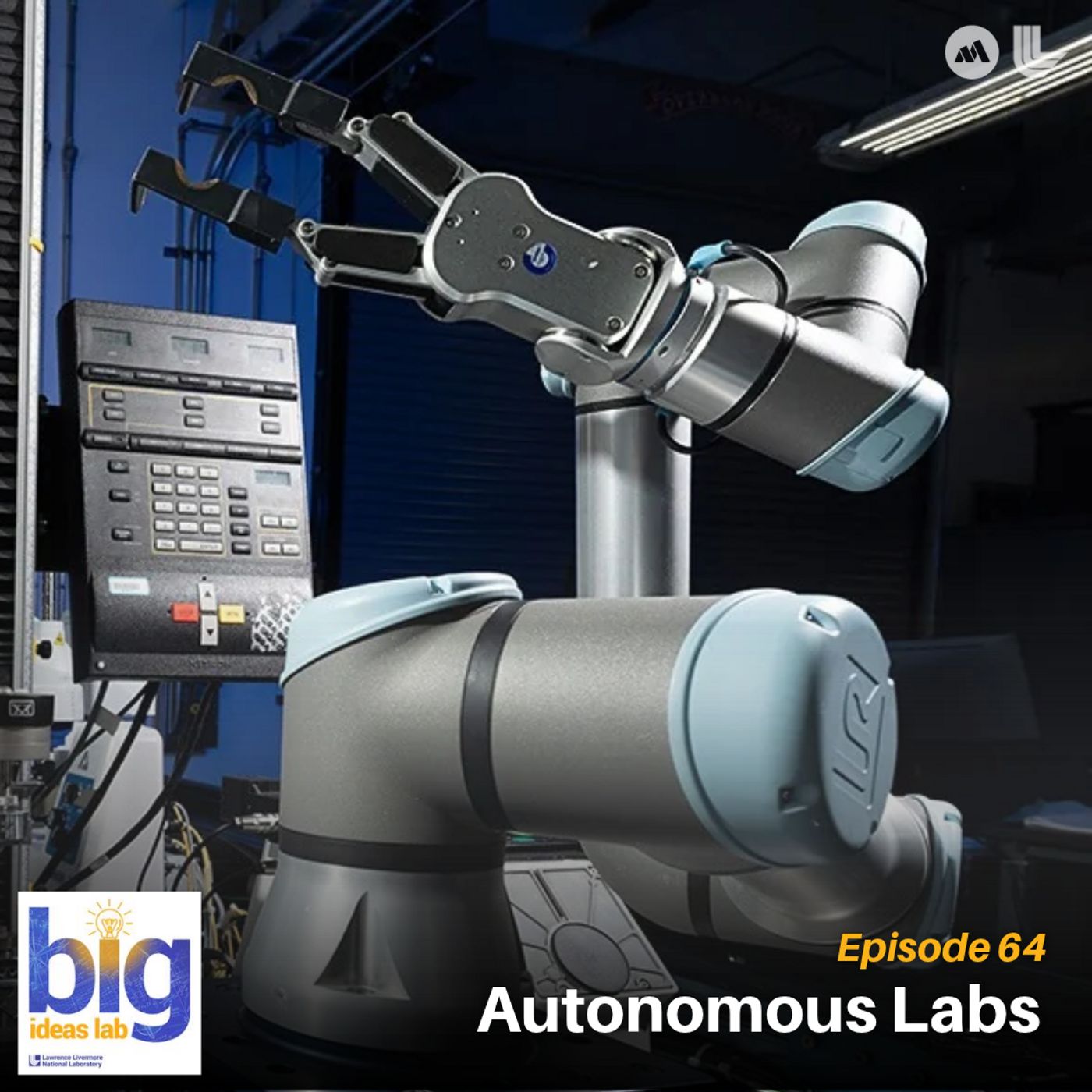
Lawrence Livermore researchers introduce autonomous laboratories as systems that combine robotics, automated experimentation, and active-learning algorithms to design materials, run tests, interpret results, and select the next experiment with minimal human intervention.
The promise is not simply faster laboratory work: automation can connect supercomputing, lasers, advanced manufacturing, testing, and simulation, turning materials research into a continuous design-and-discovery loop.
MatGym illustrates the approach by repeatedly fabricating, testing, and selecting new designs, while Project Armor explores whether robots can adapt when equipment and working conditions change.
That autonomy creates a central tension: software can convert computational mistakes into physical actions, so researchers emphasize layered safeguards, engineering controls, collaborative robots, and human oversight.
The episode’s broader argument is that machines should handle repetitive analysis and experimentation while scientists retain responsibility for interpretation, validation, judgment, and the questions worth pursuing.
Weekly email
State of the Pod, every Monday
The week's most-discussed names and stories from podcasts, with the moments behind them. Free, five minutes, unsubscribe in one click.