Oct 27, 2026 · 22 min
Exascale computing could sharpen tsunami warnings
Tsunami Forecasting
For Cascadia communities facing potentially minutes of warning, faster high-fidelity forecasts could improve decisions before destructive waves arrive.
- 1Physics-based simulations resolve the accuracy-versus-speed tradeoff that has constrained tsunami warnings.
- 2El Capitan ran a 55.5-trillion-degree-of-freedom tsunami calculation across more than 43,000 GPUs.
- 3A future network of roughly 600 seafloor sensors could turn live measurements into predictions within tens of seconds.
Don't miss
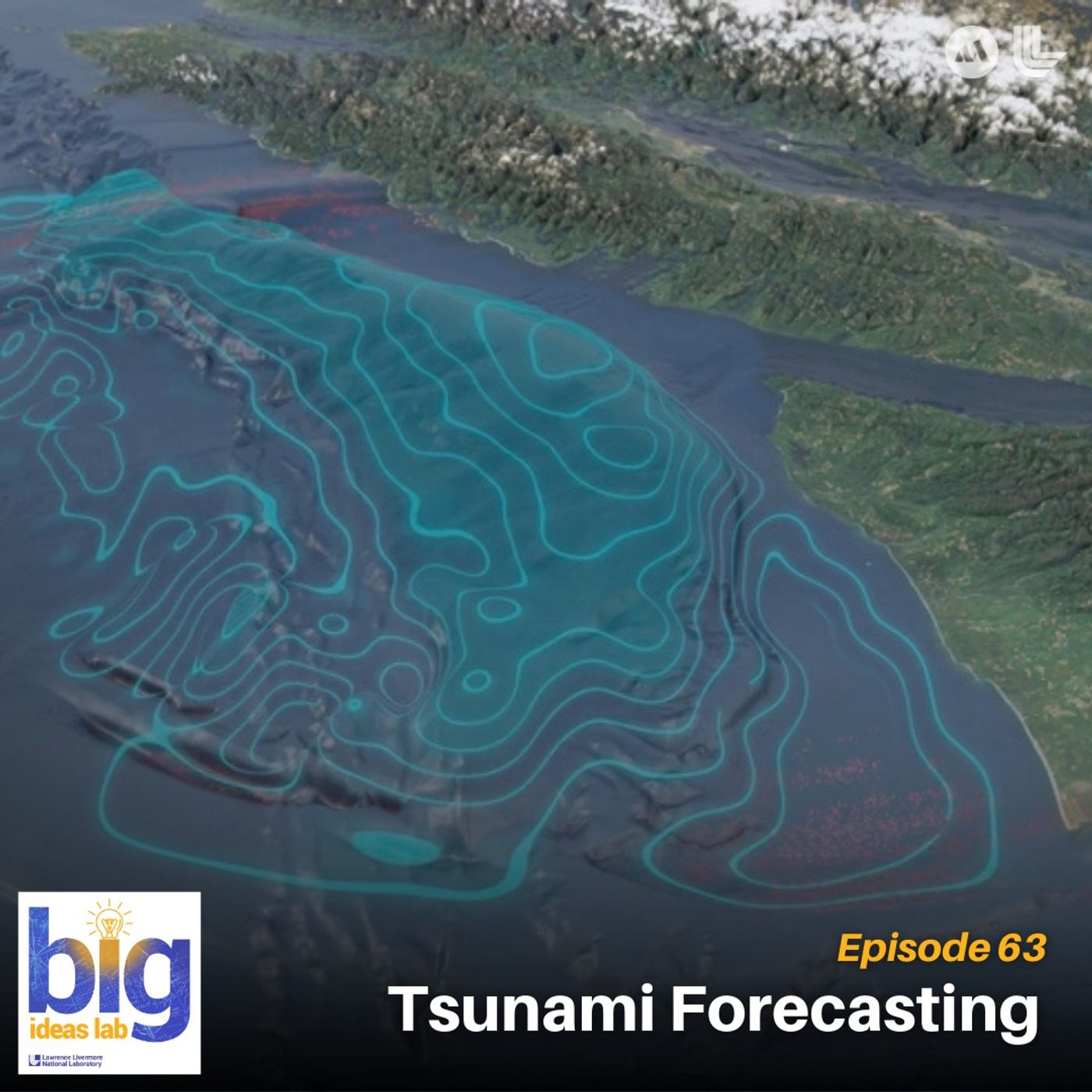
El Capitan runs a 55.5-trillion-degree-of-freedom tsunami calculation across more than 43,000 GPUs, demonstrating the scale required for rapid forecasting.
The brief
The Cascadia subduction zone could generate a devastating tsunami, leaving communities only minutes to respond. The central challenge is producing a warning that is both fast and trustworthy.
Lawrence Livermore researchers use physics-based finite element modeling to represent the ocean and seafloor in high resolution, avoiding the usual choice between speed and accuracy.
El Capitan enabled a 55.5-trillion-degree-of-freedom calculation across more than 43,000 GPUs, making the tsunami simulation one of the supercomputer’s earliest major scientific applications.
A future network of roughly 600 seafloor sensors could feed a Cascadia digital twin, reconstructing seafloor motion from sparse pressure measurements after an earthquake.
By matching live sensor data to precomputed scenarios, the system produced wave-arrival and height predictions in tens of seconds while retaining full-physics accuracy.
Weekly email
State of the Pod, every Monday
The week's most-discussed names and stories from podcasts, with the moments behind them. Free, five minutes, unsubscribe in one click.