Aug 21, 2026 · 1h 10m
Behavioral models turn human decisions into testable simulations
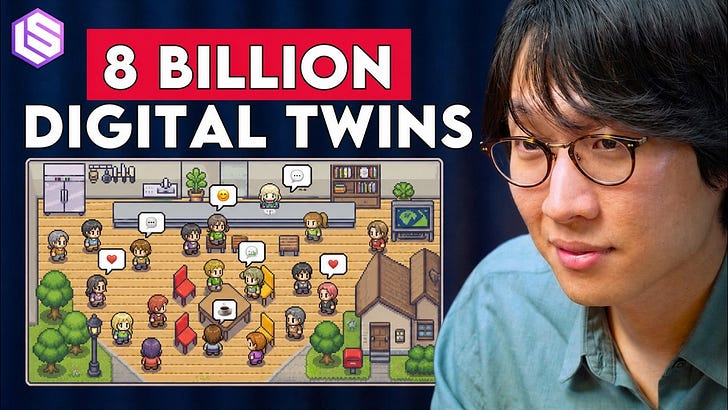
Simulation: the new Scaling Law — Joon Sung Park, Simile AI
The episode examines whether grounded simulations can improve products and public policy while exposing new risks around privacy, bias, and political use.
- 1Behavior foundation models combine interviews, behavioral records, and experiments to model how people respond to stimuli.
- 2Simulations can test counterfactual interventions and estimate their magnitude without bearing the full cost of real-world trials.
- 3Scaling human data and compute may improve behavioral models, but personal habits, motivations, and biases remain difficult to capture.
Don't miss
Park explains why simulation matters beyond predicting an outcome: it can measure magnitude, trace causal steps, and reveal surprising interventions.
The brief
Joon Sung Park traces his path from art and research at Stanford to the Smallville generative-agents paper, which made simulated social behavior a serious research subject.
Park says Simile chose simulated worlds over purely personalized assistants because agents need a deeper model of people: memory, habits, motivations, and social behavior.
The proposed behavior foundation models would learn from interviews, observational and transaction data, and randomized experiments, allowing researchers to test decisions and interventions before deploying them.
The central tension is grounding: simulations could replace some costly human panels and inform markets or policy, but consent, bias, and political guardrails become essential as use expands.
Park points to Thomas Schelling’s segregation models and a ten-year ambition to simulate major policies, framing simulation as a possible companion to real-world experiments rather than a substitute for reality.
Books & mentions
Some links are affiliate links — PodLume may earn a commission if you buy.
Weekly email
State of the Pod, every Monday
The week's most-discussed names and stories from podcasts, with the moments behind them. Free, five minutes, unsubscribe in one click.