Nov 3, 2026 · 13 min
A trapped positron puts fundamental symmetry to the test
What a trapped antimatter particle could tell us about reality
Months-long control of a single positron lets physicists probe whether antimatter truly mirrors matter, with any discrepancy threatening current theories.
- 1Researchers cooled and trapped one positron long enough to observe its quantum behavior and measure its magnetic moment.
- 2Comparing positrons with electrons tests whether matter and antimatter are exact counterparts under fundamental symmetry.
- 3Laboratory antimatter remains scarce and difficult to handle, making the research primarily a probe of reality rather than an immediate technology.
Don't miss
Gerald Gabrielse explains how observing quantum jumps in a months-long positron trap reveals the particle’s properties.
The brief
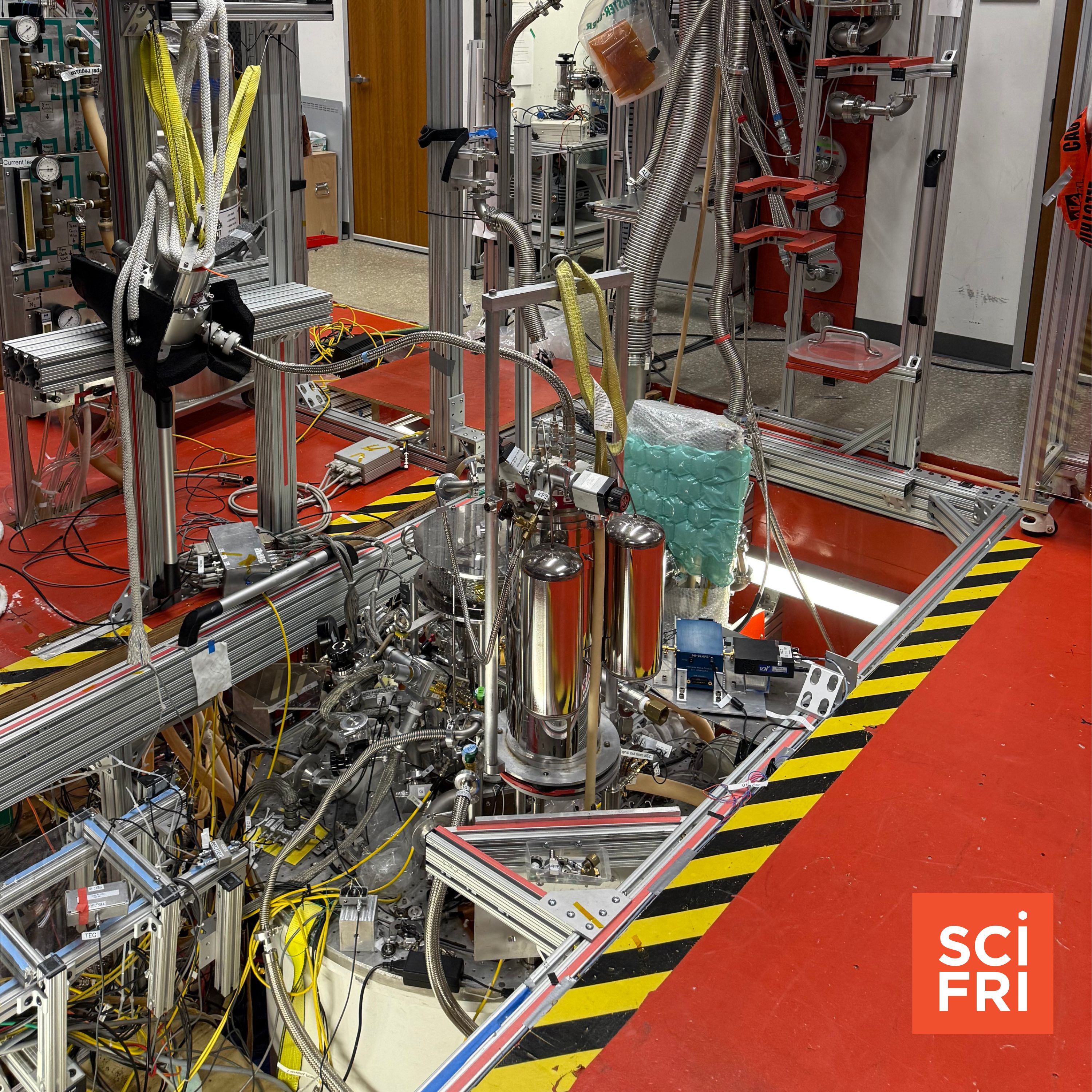
Antimatter vanishes when it meets matter, so studying it requires extraordinary control. Physicist Gerald Gabrielse describes trapping and cooling a single positron in a vacuum for months.
The trap acts like an artificial atom: researchers watch quantum jumps to study the positron’s structure and magnetic moment with exceptional precision.
Those measurements matter because positrons should mirror electrons exactly. A tiny difference would challenge the symmetries underlying current fundamental physics.
Gabrielse explains how radioactive sodium supplies positrons and revisits the difficult production of antihydrogen, from technical delays to eventual success at CERN.
Science fiction imagines antimatter by the ton, but laboratories produce only tiny quantities. The practical payoff is distant; the immediate goal is understanding reality.
Weekly email
State of the Pod, every Monday
The week's most-discussed names and stories from podcasts, with the moments behind them. Free, five minutes, unsubscribe in one click.