Nov 23, 2026 · 19 min
Janna Levin tests the universe’s strangest possibilities
Puzzling over the most expansive ideas in the universe
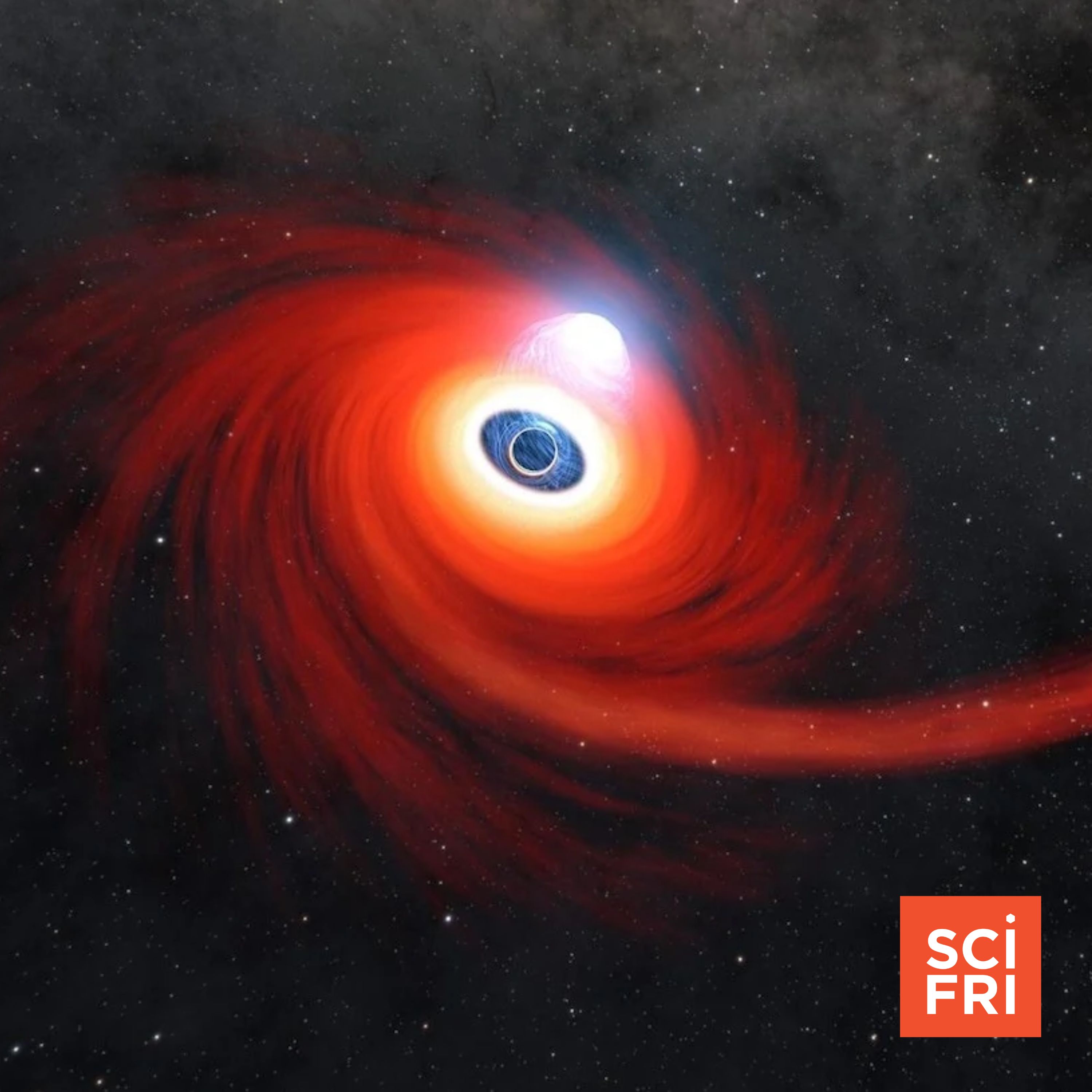
The conversation shows how ideas about hidden matter, extra dimensions, black holes, and time travel move between speculation and mathematical constraint.
- 1Dark matter and dark energy account for the universe’s unseen majority, inferred through gravitational effects and cosmic expansion.
- 2Black holes may illuminate quantum gravity, including the possibility that spacetime emerges from quantum entanglement.
- 3Speculative theories matter even when they fail, because mathematical dead ends can reveal deeper physical principles.
Don't miss
Levin explains how a failed Möbius-shaped-spacetime idea led to insights about broken symmetries and the matter–antimatter imbalance.
The brief
Janna Levin begins with the universe’s missing 95 percent: dark matter reveals itself through gravity, while dark energy appears in the accelerating expansion of space.
The discussion moves from extra dimensions and multiverses to black-hole interiors, where Levin considers baby universes while stressing that mathematical possibilities are not yet predictions.
Levin explores whether spacetime and gravity could emerge from quantum entanglement, using temperature as an analogy for how hidden microscopic behavior becomes a macroscopic reality.
Time travel survives in some solutions to Einstein’s equations, but Gödel’s example, Hawking’s chronology protection, quantum mechanics, and observers may all point toward prohibition.
A failed proposal involving Möbius-shaped spacetime shows why speculative physics remains valuable: ruling out an idea can expose broken symmetries and the matter–antimatter imbalance.
Books & mentions
Weekly email
State of the Pod, every Monday
The week's most-discussed names and stories from podcasts, with the moments behind them. Free, five minutes, unsubscribe in one click.