Oct 27, 2026 · 18 min
Listen from 17:17
Listen at 17:17
Scientists reconstruct the hidden life of T. rex
What was life like for Tyranossaurus rex?
The episode replaces the movie monster with a living animal whose body, behavior, and ecological role can be inferred from incomplete evidence.
- 1T. rex’s appearance, sounds, and social behavior remain partly uncertain because crucial soft tissues rarely fossilize.
- 2Young tyrannosaurs were vulnerable, gangly animals that changed dramatically as they developed into powerful adults.
- 3Fossils suggest T. rex was a warm-bodied ecosystem participant, consuming large carcasses across varied prehistoric habitats.
Don't miss
Black reframes T. rex as a warm-bodied, socially interactive animal whose life can be reconstructed from injuries, infections, teeth, and other indirect evidence.
The brief
Science writer Riley Black joins Kathleen Davis to examine T. rex beyond its movie image, asking what its ordinary life may have looked, sounded, and felt like.
The famous roar remains speculation: soft tissues and throat structures did not fossilize, leaving crocodilians and alligators as imperfect clues rather than definitive answers.
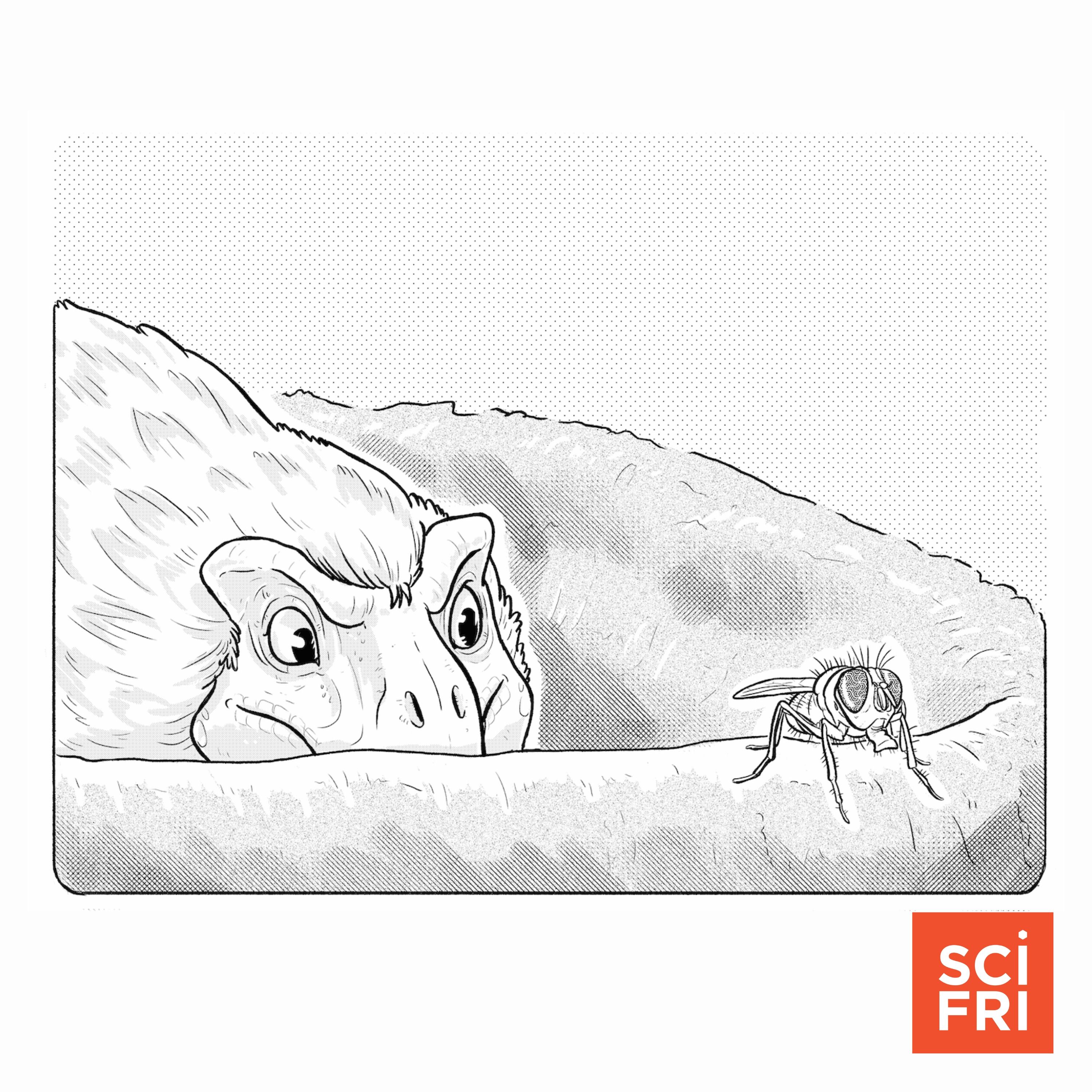
Black describes a vulnerable young animal with long legs, large eyes, and blade-like teeth, then traces its transformation into the massive adult familiar from fossils.
Bite marks, injuries, infections, geology, and living animal comparisons reveal that T. rex interacted with others through conflict, courtship, mating, scent, and possibly disease.
Fossilized teeth point to a body temperature near 97 degrees Fahrenheit, while its role as a consumer of large carcasses placed it inside a broader ecosystem.
Weekly email
State of the Pod, every Monday
The week's most-discussed names and stories from podcasts, with the moments behind them. Free, five minutes, unsubscribe in one click.